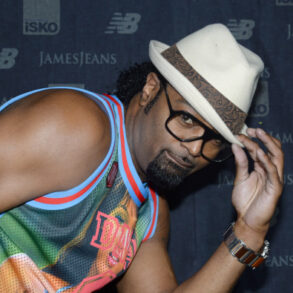



Da Brat did not grow up in the balcony of a downtown theater. She grew up splitting time between Chicago’s West Side and South Side, playing seven instruments at Kenwood Academy, and turning that city noise into a voice that made history. This holiday week, she brought that voice back to a Broadway in Chicago stage — not to recite Tchaikovsky, but to open the door for hip-hop dance to tell the story.
The platinum rapper is hosting and emceeing The Hip Hop Nutcracker at the Cadillac Palace Theatre, with a run that began November 24 and wraps November 29. In a new interview with Rolling Out’s Eddy “Precise” Lamarre, she described a production that remixes the classic ballet with hip-hop choreography, a live DJ, and an electric violinist. Brat’s job is to set the temperature: she steps out first, runs through some of her biggest records, and gets a seated theater crowd to move like they came to a show.
That crowd is the point. Brat said she never got to see theatrical productions as a child. The family might go downtown to look at Christmas lights, but a story told entirely through dance was not on the calendar. Now she is standing inside one, and the language onstage is her culture. Kids who may not know the Nutcracker, and kids who may not know the foundations of hip-hop, get both in the same night — without a spoken script. The story, she noted, is interpreted through movement alone, and she has watched people who do not speak English still follow it to the end.
She is also clear about the history she walks in with. In 1994, Funkdafied went platinum on physical sales, making Da Brat the first female solo rapper to sell a million albums. She told Rolling Out that the milestone mattered less as a trophy than as proof she could take care of the people who had taken care of her, including the grandmothers she wanted to buy cars and houses for. More than thirty years later, she still treats that status as a responsibility: if a young fan in the building knows the words to “Funkdafied,” she is ready to pull them up and pass the blessing on, the same way Jermaine Dupri once opened a door for her.
Family remains the holiday tradition she will not skip. She talked about getting home to her 3-year-old son, her mother, and her wife, and about making room at the table for people who might not have anywhere else to go. The show, in that sense, is an extension of the same instinct — a Chicago homecoming that puts hip-hop dance in a palace theater and dares the whole family to come see what the culture can do when the story has no microphone at all, except the one she holds at the start of the night.